Getting Started
How to read a dog treat label, the parts a food label guide won’t cover
 7 min read7 min read
How to read a dog treat label is a slightly different question from reading a kibble bag, even though the two get treated as the same skill. We’ve already covered the basics of decoding a dog food label. Treats deserve their own look, because the things worth checking are genuinely different.
A complete dog food has to balance dozens of nutrients to meet a life stage’s full daily needs. A treat doesn’t, and isn’t meant to. That’s not a flaw, it’s the whole point: treats are a complementary product, not a meal. The result is that treat labels are often much simpler than food labels, sometimes deliberately so, and that simplicity is exactly what’s worth checking for.
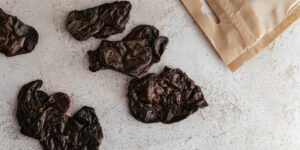
The first thing to check on a treat label is whether “single ingredient” or “one ingredient” claims actually hold up against the ingredients list itself. A genuinely single-ingredient treat, like our Ostrich Naturals range, lists one thing, the named protein, and nothing else: no preservatives, no flavour enhancers, no fillers.
Watch for treats marketed as simple or natural that still list multiple ingredients once you check the back of the pack. A short list isn’t automatically the same as a single-ingredient one.
Unlike a complete food, where percentage breakdowns (protein, fat, fibre) describe a balanced formula, a single-ingredient treat made from one real thing is, definitionally, very close to 100% of that ingredient once moisture is accounted for. If a treat lists a percentage of named protein well below what you’d expect from something genuinely single-ingredient, that’s worth a second look at the rest of the ingredients list.
Treat packaging uses a handful of processing terms that are worth knowing, since they describe how the treat was made, not what’s in it:
None of these terms tell you about ingredients, they tell you about method. Always check both.
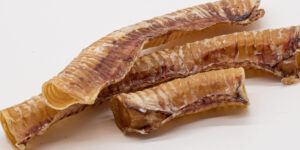
A chew, like a bone or tendon piece, is often labelled differently from a soft treat, since it’s not necessarily meant to be eaten entirely. Look for sizing guidance (suitable for small, medium, or large breeds) and any supervision guidance on the pack. This matters more for chews than for soft treats, since chew size and your dog’s chewing strength are a genuine safety consideration, not just a preference.
If you’re working through a food sensitivity, treat labels matter just as much as food labels, sometimes more, since treats are easy to overlook as a source of an unwanted ingredient. We cover this in more depth in our hypoallergenic treats guide, but the short version is that a genuinely single-ingredient treat is the easiest kind to trust here, precisely because there’s nothing else on the label to second-guess.
How to read a dog treat label comes down to three checks: does “single ingredient” actually mean one ingredient, does the percentage breakdown make sense for what the treat claims to be, and does sizing or supervision guidance exist if it’s a chew. A short ingredients list is a good sign, but it’s worth confirming rather than assuming.
This article is for general guidance. If you’re managing a diagnosed food allergy, work with your vet to confirm any new treat is appropriate for your dog.
Sign up for information and new product updates.